
In case you hadn’t noticed, lawns can be oddly competitive. One minute you’re happily mowing away, the next you’re staring across the fence at a patch of grass so green it could host Wimbledon, wondering where you went wrong. And somehow, it’s always the neighbour who swears they “don’t do anything special” (they’re lying, of course).
In this guide, we’ve broken down the real reasons their lawn looks unfairly brilliant — and, importantly, how you can outdo them without having to give up all your hobbies in the name of lawn care.

🏁 Start with the Cutting (Because That’s Where the Trouble Usually Begins)
Let’s start by addressing the obvious. Most lawns look miserable simply because they’re cut badly. Plenty of people treat mowing like a punishment and take it out on the grass. They’ll go too short, too fast, or with a mower that could have done with replacing a decade ago.
Here’s where your neighbour likely already has the advantage if they know how to cut the grass sensibly. They probably keep their mower blades sharp, set the cutting height somewhere reasonable, and avoid scalping the lawn into submission. Grass doesn’t need a buzz cut, and as much as this might save you time, cutting more than one-third of your grass blades will cause them to turn yellow.
Keep your grass slightly longer with a proper mowing routine, and it’ll actually grow thicker and greener. It’s kind of like how getting the ends trimmed off your hair encourages healthier growth.
Need a new lawn mower? We’ve reviewed the best lawn mowers in the UK here.
🚿 Watering: The Silent Advantage
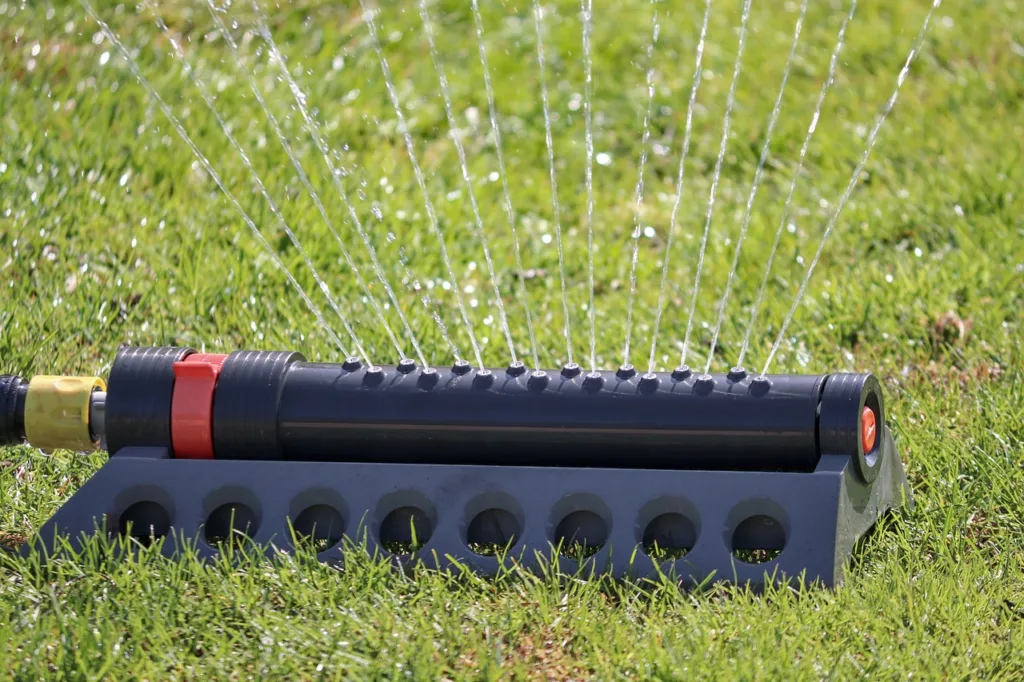
Your neighbour might claim they “just leave it to the rain,” but their suspiciously green lawn says otherwise. There’s a good chance that they’re watering their lawn, especially in the summer (which, even in the UK, does get pretty hot and dry, and can be damaging to cool-season grasses).
To enjoy a green and healthy lawn throughout the warmer seasons, I recommend watering the grass in the early morning (before the water can evaporate in the sun) and watering deeply, so the water penetrates the soil and reaches the grass roots.
Just don’t get into the habit of watering every day, as this can actually be counterproductive, causing your lawn’s roots to loaf around the surface waiting for their next hit. You still want to grow downwards into the soil.
🌱 Feeding Doesn’t Make You a Lawn Nerd
If you haven’t fed your lawn in a few years, you’re definitely not the only one. Millions of lawns in the UK survive solely on rainwater and whatever nutrients blow in from the neighbour’s garden, so it’s unsurprising that most of them look passable at best.
You can transform even the miserable-looking patch of grass with a couple of annual feeds — one in spring, one in early autumn. And by the way, you don’t need anything exotic or expensive here. Your neighbour probably just uses a basic lawn feed and applies it with mild enthusiasm. That’s enough.
If you’re in the market for some fertiliser and don’t know where to start, we’ve reviewed the best lawn feeds that you can use in your lawn care program. Check out our guide to the best lawn feed here.
🤔 Dealing with Bald Spots, Moss, and the “That’ll Fix Itself” Problem
Mysterious bald patches and moss are extremely common lawn issues. Take it from me: I established a beautiful lawn from scratch, then let it go for a growing season, as I was too busy to commit to lawn care. Within a single summer, my lawn was patchy and starting to look like the “before” photo once more.
If your neighbour is the sort of person who actually commits to tackling little issues before they become major ones, that’s probably why they have a great-looking lawn. That might mean overseeding to thicken out sparse patches, or using spot treatments and moss killer to tackle stuff that’s not supposed to be growing on your lawn. Scarifying in spring is also a good idea, and while it looks dramatic (and mildly traumatic), the results speak for themselves.
Do that, and your lawn will look less like a patchwork quilt and more like a block-colour blanket.
Need more tips on the tools you should use for a healthier, thicker, greener lawn? Here’s my guide to the 5 essential tools for the perfect lawn.

📏 Edges: The Small Detail That Makes a Big Difference
If there’s one thing that instantly elevates a lawn from “average” to “annoyingly good,” it’s tidy edges. Your neighbour isn’t secretly hiring the National Trust — they’re just trimming the borders now and then.
A crisp edge makes even mediocre grass look respectable. So, how do you achieve this?
Assuming that you’re starting from scratch, you’ll want to begin by defining the boundary. If your lawn has slowly merged into the flowerbed, you’ll need to re-cut the edge. Use a half-moon edger or edging spade and follow a straight line (string helps), aiming for a clean vertical face.
Once the shape is sorted, you’ll just need to keep it looking sharp by running a pair of long-handled edging shears or a strimmer along the border every time you mow.
If your lawn meets a hard surface, like a path or a patio, your job is simply to keep grass from spilling over the edge. And if you really want to commit, drop in some physical edging (metal, timber, or plastic). It keeps everything neat and gives you a permanent line to follow. Just avoid the bargain-bin wobbly plastic stuff.
Looking for a new lawn strimmer? We’ve tried and tested more than a dozen strimmers sold in the UK, and all the best ones are listed in this guide.
🍀 Weed Control: Stopping the Garden Freeloaders
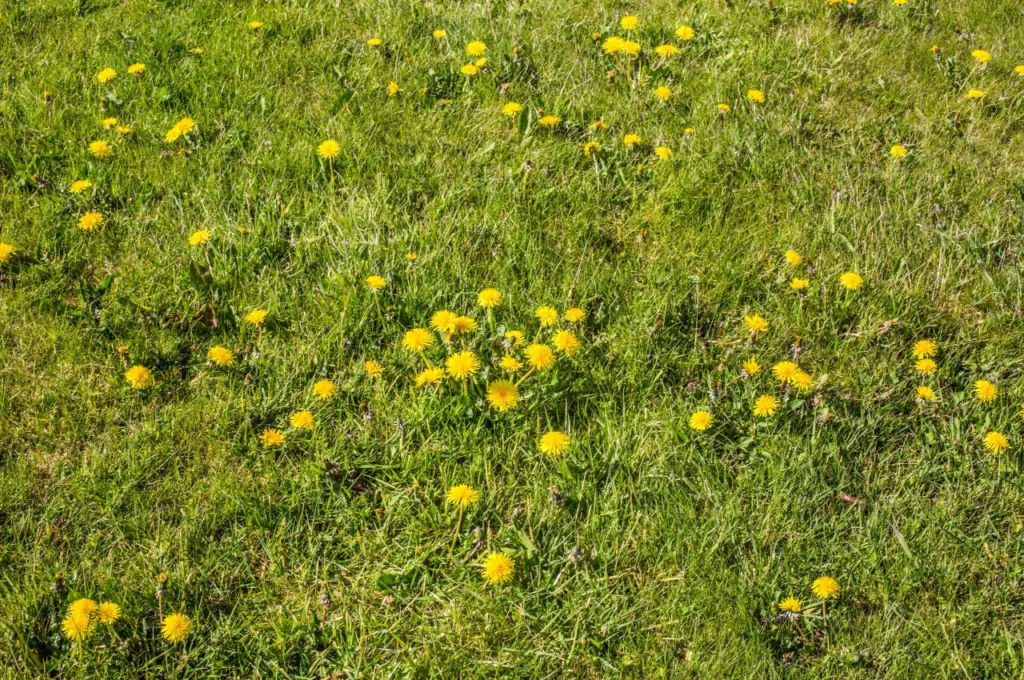
If there’s one thing that grows more freely than grass, it’s weeds. Even on the most established lawns, something unidentified will sprout up overnight, and pesky weeds can quickly take over if you let them.
You don’t need industrial-strength chemicals for weed control (and actually, I rarely recommend this approach). Instead, you want to mainly focus on making your lawn strong enough that weeds are less likely to move in.
Start by dealing with dandelions, clover, ragwort, daisies, and all the other usual suspects. Read our list of the most common types of weeds in the UK to see what you’re dealing with. You can remove most weeds, roots and all, with a simple weeding knife or a daisy grubber. If you just behead them with the mower, all you’re doing is giving them a free haircut and potentially also dispersing the weed seeds across your lawn.
If you’ve let the weeds take over, using a selective lawn weedkiller is fine. Just make sure you get one that’s designed for lawns and follow the instructions carefully to avoid killing your entire garden.
🤦 Dodging the Classic Rookie Mistakes
If you want to pull ahead in the Lawn Championship of 2026, avoid the usual blunders:
Mowing when it’s wet (it’ll clog your mower and put your lawn at more risk of disease)
Leaving grass clippings on your lawn (unless you have a mulching mower, which cuts grass up smaller)
Setting your mowing height too low
Ignoring weeds until they’ve built a thriving civilisation
Raking leaves only when they start to pile up
Your neighbour probably doesn’t know everything — they just aren’t doing those things.
🤨 Consistency Beats Fancy Gadgets
Getting a beautiful lawn that rivals your neighbour’s isn’t something that’ll happen overnight. But it’s also not something that takes the most expensive equipment or the fanciest gadgets. You don’t need a robotic mower or a soil testing kit, and you definitely don’t need a degree in horticulture. A decent routine and a bit of attention get you 90% of the way there.
Your neighbour isn’t a lawn genius. They’ve simply found a rhythm with mowing, watering, feeding, fixing issues, and maintaining tidy edges. (And they might also be retired, but that’s neither here nor there.) They’re setting the perfect example of lawn care done right, so if you’re still struggling to get yours looking as good, don’t be afraid to ask them what they’re doing! Unless they’re the sneaky competitive type, they should be happy to offer a word of advice.
🏁 Final Word – The Moment Your Lawn Turns the Tables
Stick with it, and you should notice that your own lawn will quietly start to look thicker, greener, and healthier as the weeks pass by. And soon enough, you’ll see your neighbour peering over at your grass, wondering when you suddenly became Alan Titchmarsh.
Congratulations. You’ve won the great British garden feud — politely, of course, because this is still the UK.